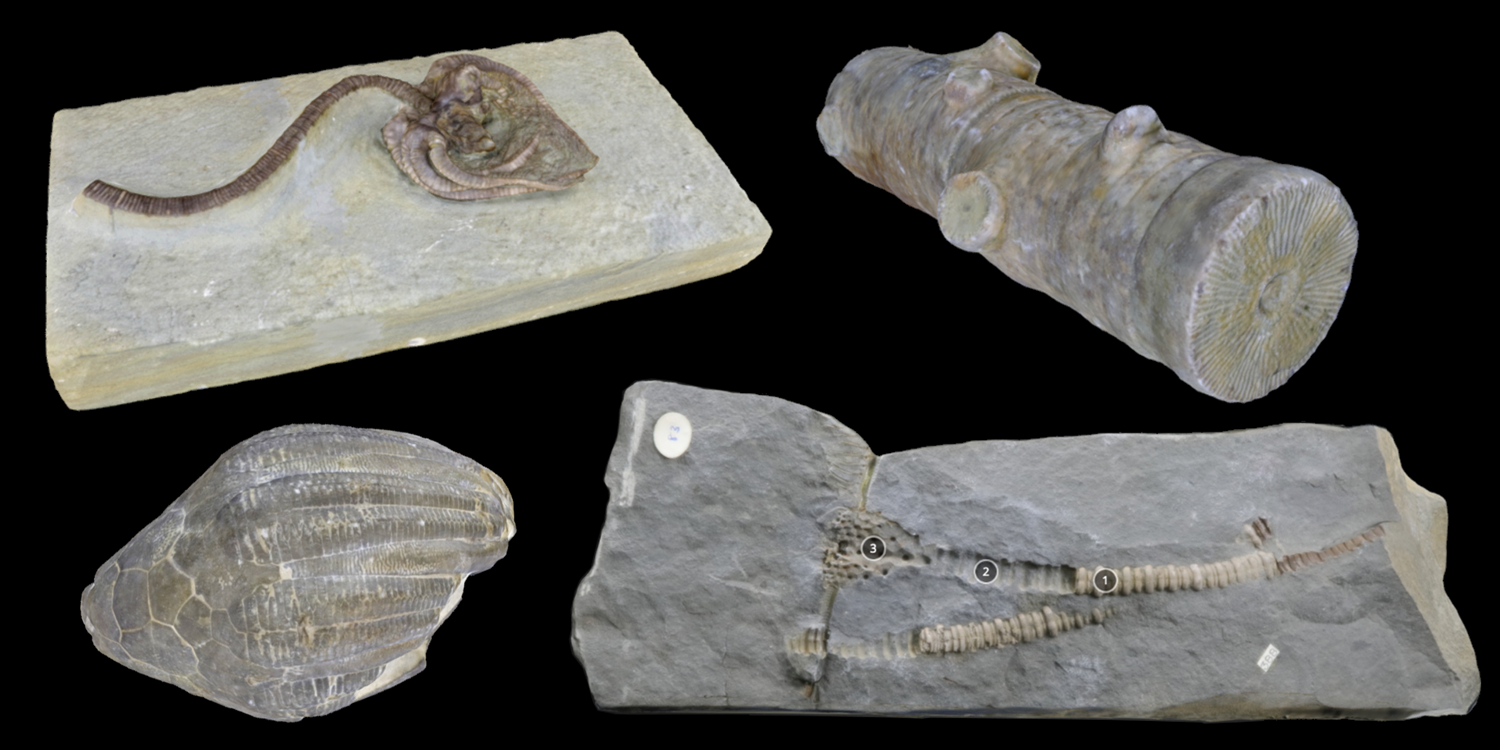
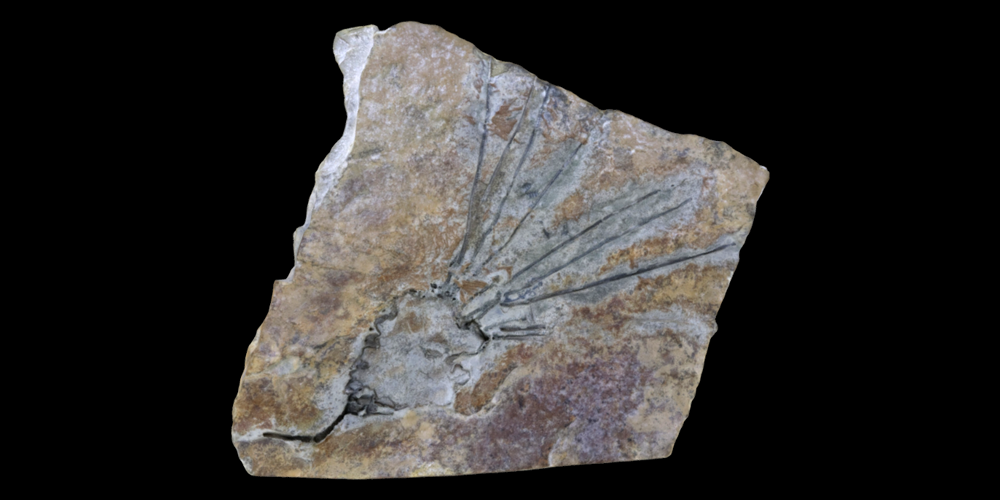
The Eocrinoidea were an extinct class of echinoderms that lived between the Early Cambrian and Late Silurian periods. They are the earliest known group of stalked, brachiole-bearing echinoderms, and were the most common echinoderms during the Cambrian.
The earliest genera had a short holdfast and irregularly structured plates. Later forms had a fully developed stalk with regular rows of plates. They were benthic suspension feeders, with five ambulacra on the upper surface, surrounding the mouth and extending into a number of narrow arms.
Phylogeny
Eocrinoids were a paraphyletic group that are seen as the basal stock from which all other blastozoan groups evolved.
Early evolution
The following cladogram, after Nardin et al. 2017, shows the progression of early eocrinoid families, with all other eocrinoid families (including representatives Trachelocrinus and Ridersia) grouped with "derived Blastozoans" as their relationships with each other and with other blastozoans are not addressed.
Note that some other sources use a more restricted definition of Eocrinidae, or use the spelling Lichenoididae in place of Lichenoidae.
Relationships to other groups
Relationships among the eocrinidae and other blastozoan clades are an area of ongoing study. Below are two of many cladograms showing some aspect of eocrinoid paraphyly or polyphyly.
References
Works cited