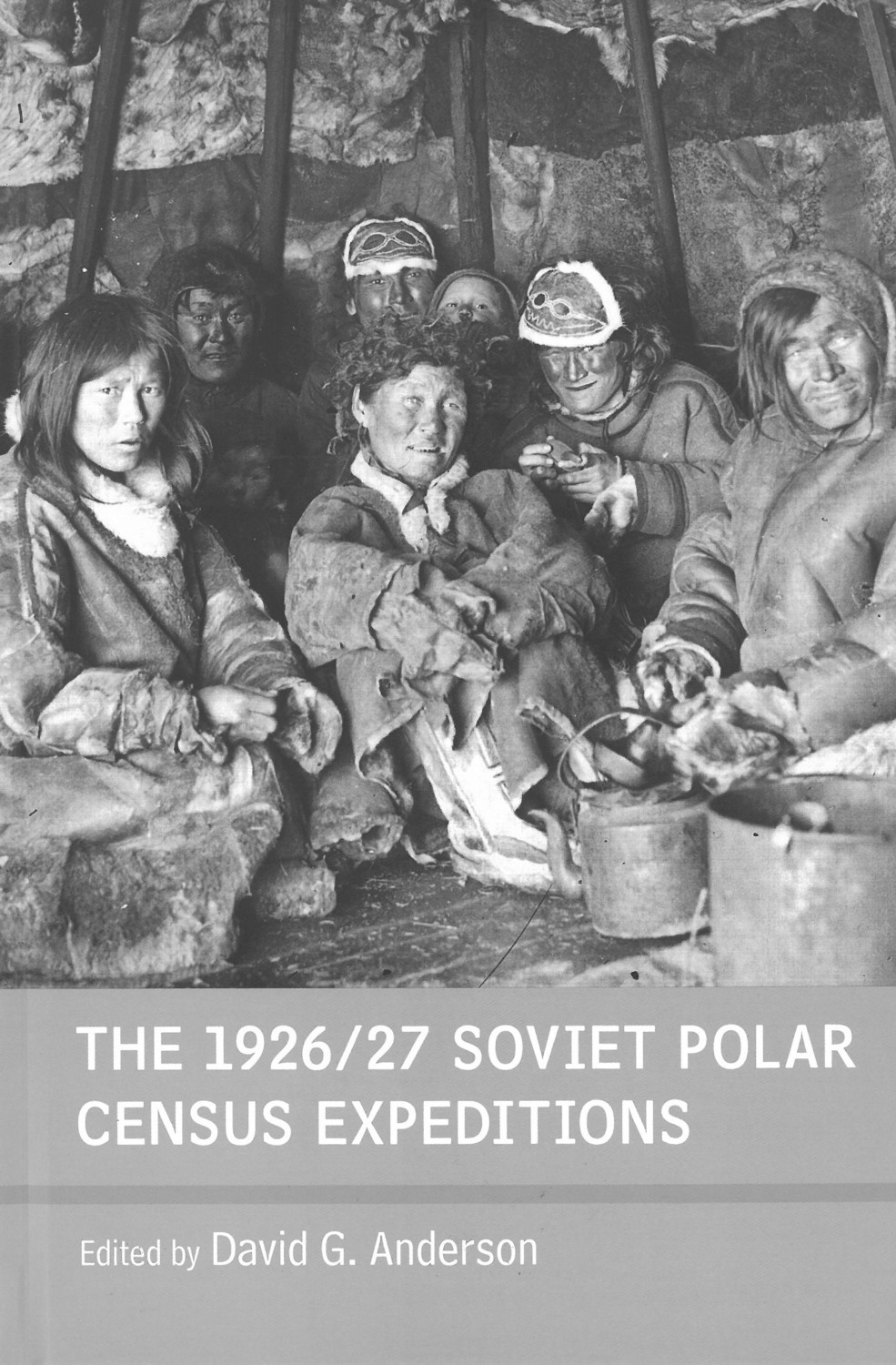
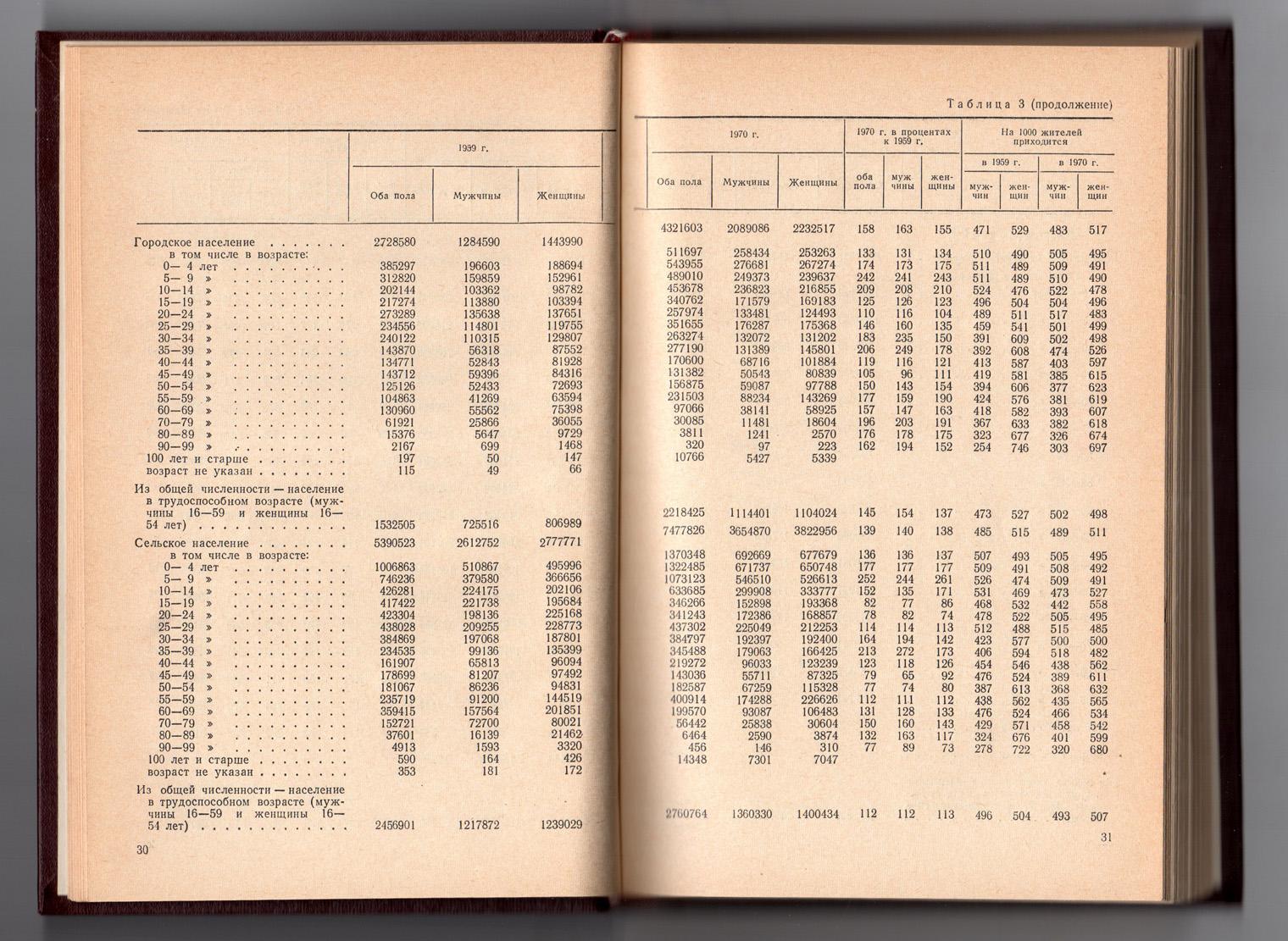
The 1926 Soviet census (Russian: Всесоюзная перепись населения, All-Union census) took place in December 1926. It was the first complete all-Union census in the Soviet Union and was an important tool in the state-building of the USSR, provided the government with important ethnographic information, and helped in the transformation from Imperial Russian society to Soviet society. The decisions made by ethnographers in determining the ethnicity (narodnost) of individuals, whether in the Asiatic or European parts of the former Russian Empire, through the drawing up of the "List of Ethnicities of the USSR", and how borders were drawn in mixed areas had a significant influence on Soviet policies. Ethnographers, statisticians, and linguists were drawing up questionnaires and list of ethnicities for the census. However, they also had the more ambitious goal of deliberately transforming their identities according to the principles of Marxism–Leninism. As Anastas Mikoyan put it, the Soviet Union was "creating and organising new nations".
Previous censuses
The first all-Union census was preceded by two partial censuses carried out by the Bolsheviks after their seizure of power in Russia. The first, the general census of 1920, took place during the Civil War and the Soviet-Polish War. It was thus unable to deal with the Crimea, much of Transcaucasia, Ukraine, Byelorussia, Far Eastern, Siberian, and Central Asian parts of the Soviet Union as well as with its Far Northern parts. Yet it is worth to note that there was only 15,000,000 population increase between 1920 and 1926 constituting in some 131,304,931 people according to the TIME magazine while is still undisclosed in Russian history. The 1923 Census was restricted to cities. Prior to the Russian Revolution, the only Russian Empire Census was done in 1897.
Methodology
By classifying the population in terms of narodnosti (nationalities)—as opposed to tribe or clan—along with policies which gave these nations land, resources, and rights, experts and local elites were encouraged to interfere with the information collecting.
The Georgian and Ukrainian delegations each had concerns with the formulation of narodnosti proposed in the census. The Georgian delegation proposed classifying the population in terms of natsionalʹnosti, as they considered it better suited for developed nations like Georgians. Ukrainian representatives preferred to use native language for classification instead of nationality. These protests did not lead to changes.
Responses to the question of nationality were at times reevaluated (changed) by census takers or later by state analysts for "correctness", as it was believed that some people would "confuse" nationality with such other categories as place of residence, native language, or clan.
List of ethnicities
This list, called Programmy i posobiya po razrabotke Vsesoyuznoy perepisi naseleniya 1926 goda, vol. 7, Perechen i slovar narodnostey, Moscow 1927, was developed by the Central Statistical Administration of the USSR. In preparation to the census
Composition of the USSR
For the Transcaucasian Socialist Federative Soviet Republic, Georgians were considered the Titular Nationality.
Population of the USSR sorted by most common nationalities in 1926
Population by republics
- Russian SFSR – 100,891,244 (urban 17,442,655)
- Kazakh ASSR – 6,503,006 (urban 539,249)
- Kirghiz ASSR – 993,004 (urban 121,080)
- Ukrainian SSR – 29,018,187 (urban 5,373,553)
- Moldavian ASSR – 572,114
- Uzbek SSR – 5,272,801 (urban 1,102,218)
- Tajik ASSR – 827,200
- Byelorussian SSR – 4,983,240 (urban 847,830)
- Transcaucasian SFSR
- Georgian SSR – 2,666,494 (urban 594,221)
- Azerbaijan SSR – 2,314,571 (urban 649,557)
- Armenian SSR – 880,464 (urban 167,098)
- Turkmen SSR – 1,000,914 (urban 136,982)
- Total in the Soviet Union – 147,027,915 (urban 26,314,114)
Administrative divisions of Ukraine (1925–1932)
The census aggregated census data for several okruhas of Soviet Ukraine in a larger subdivision called a pidraion or podraion (Russian: подрайон, romanized: podraion; Ukrainian: підрайон, romanized: pidraion). There were six such subdivisions.
Subdistricts
See also
- Administrative division of Ukraine (1918)
- Administrative divisions of Ukraine (1918–1925)
- Administrative divisions of the Ukrainian SSR
- Development of the administrative divisions of Ukraine
- Okruhas of the Ukrainian SSR
References
External links
- All-Union census 1926 (Demoskop Weekly) (in Russian)
- Full text of "Всесоюзная перепись населения 17 декабря 1926 г", КРАТКИЕ СВОДКИ. ВЫПУСК IV. НАРОДНОСТЬ И РОДНОЙ ЯЗЫК НАСЕЛЕНИЯ СССР
- Raw texts of Summaries ("Краткие Сводки") III-X
- L'Oukraine. National Censuses and Vital Statistics in Europe, 1918-1939 (books.google.com).
Further reading
- Henry Joachim Dubester (1948). "USSR: Census of 1926". National Censuses and Vital Statistics in Europe, 1918–1939: An Annotated Bibliography, with 1940–1948 Supplement. USA: Gale Research Company.
- Francine Hirsch (2005) Empire of Nations: Ethnographic Knowledge and the Making of the Soviet Union, Cornell University Press
- Contains detailed information on the preparation of the census, on the definition of ethnicity (narodnost), etc.